SAIL’s Publicity, Organization and Academic departments welcome new members
On October 17 and 18, SAIL’s three departments held welcome meetings to introduce new members to their teams, day-to-day work and upcoming plans.
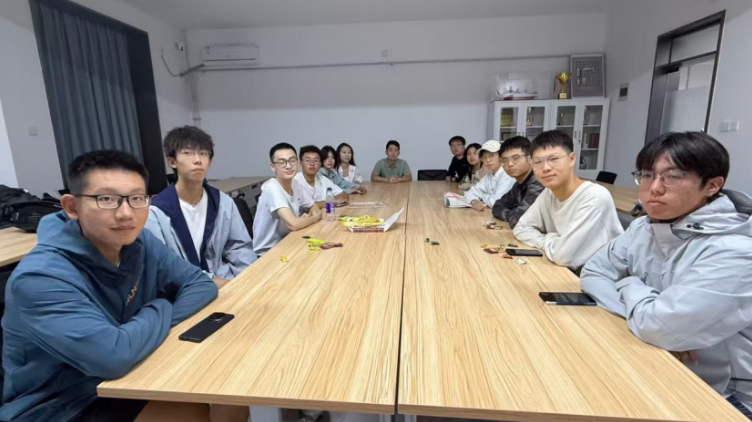

On October 17 and 18, SAIL’s three departments held welcome meetings to introduce new members to their teams, day-to-day work and upcoming plans.
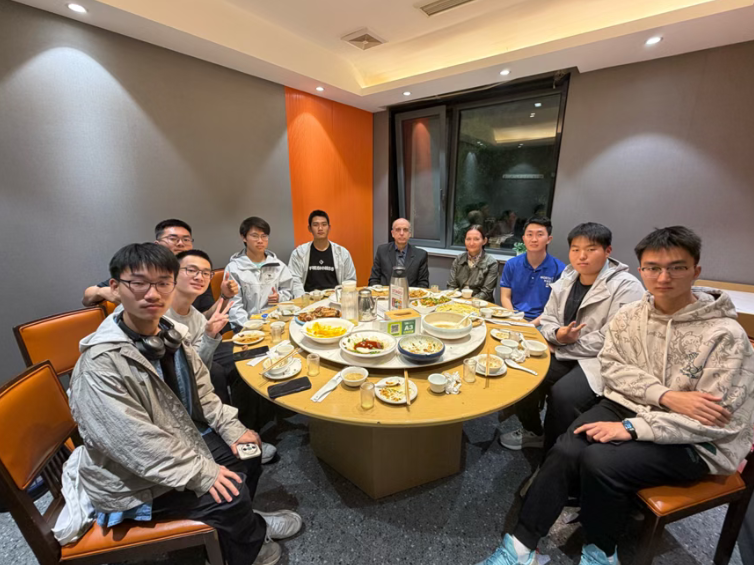
On October 24, 2026, Prof. Igor Bashmachnikov and Dr. Iuliia Radchenko visited SAIL and joined members for a relaxed conversation over dinner about culture, personal interests and future careers.
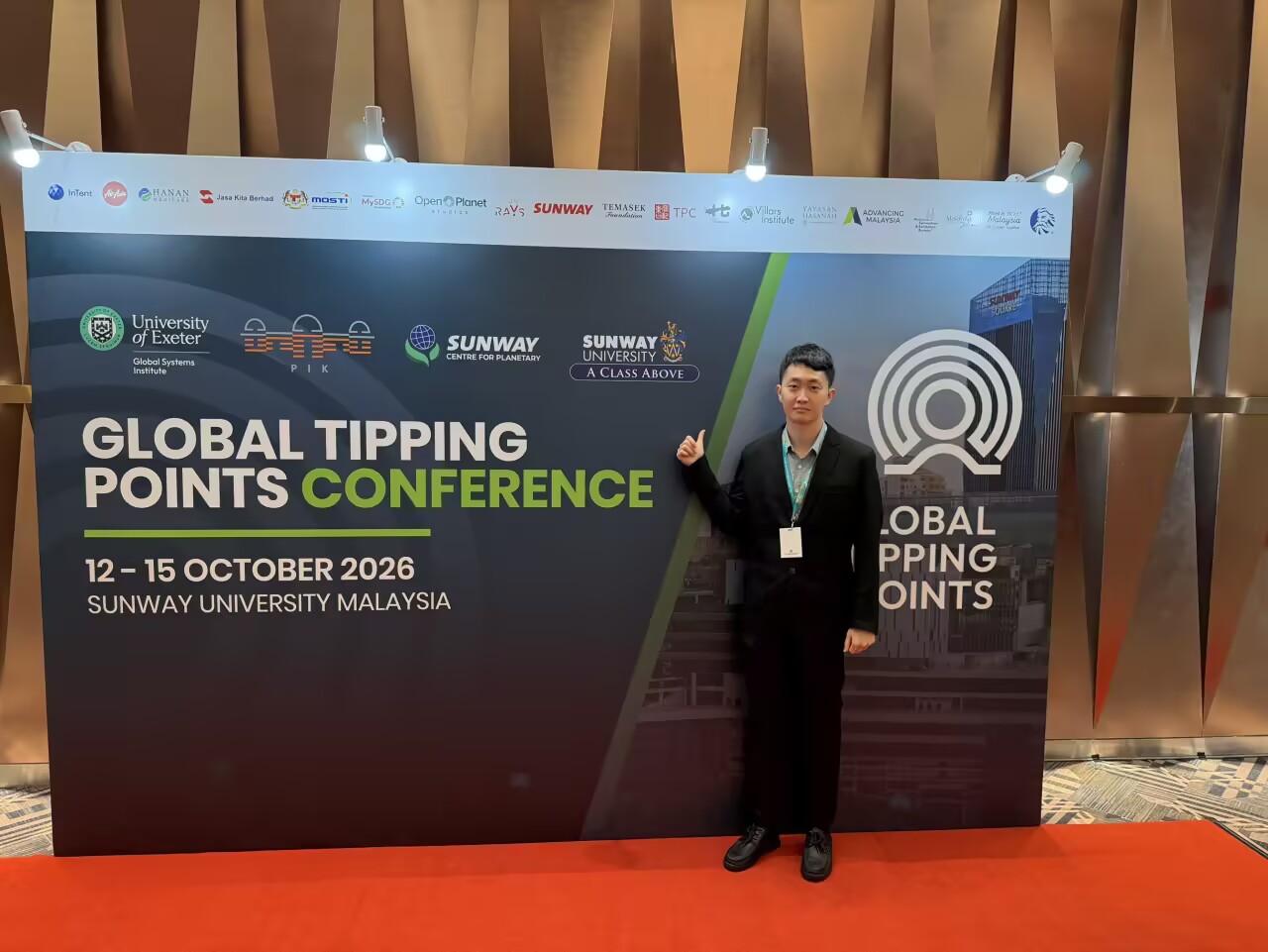
SAIL founder Ruijian Gou attended the Global Tipping Points Conference 2026 in Kuala Lumpur, Malaysia, held on October 12–15. He gave an academic presentation on abrupt warming in the Arctic Ocean and extreme events, presented a poster on Arctic resilience assessment, and discussed ocean-circulation tipping points with other participants.
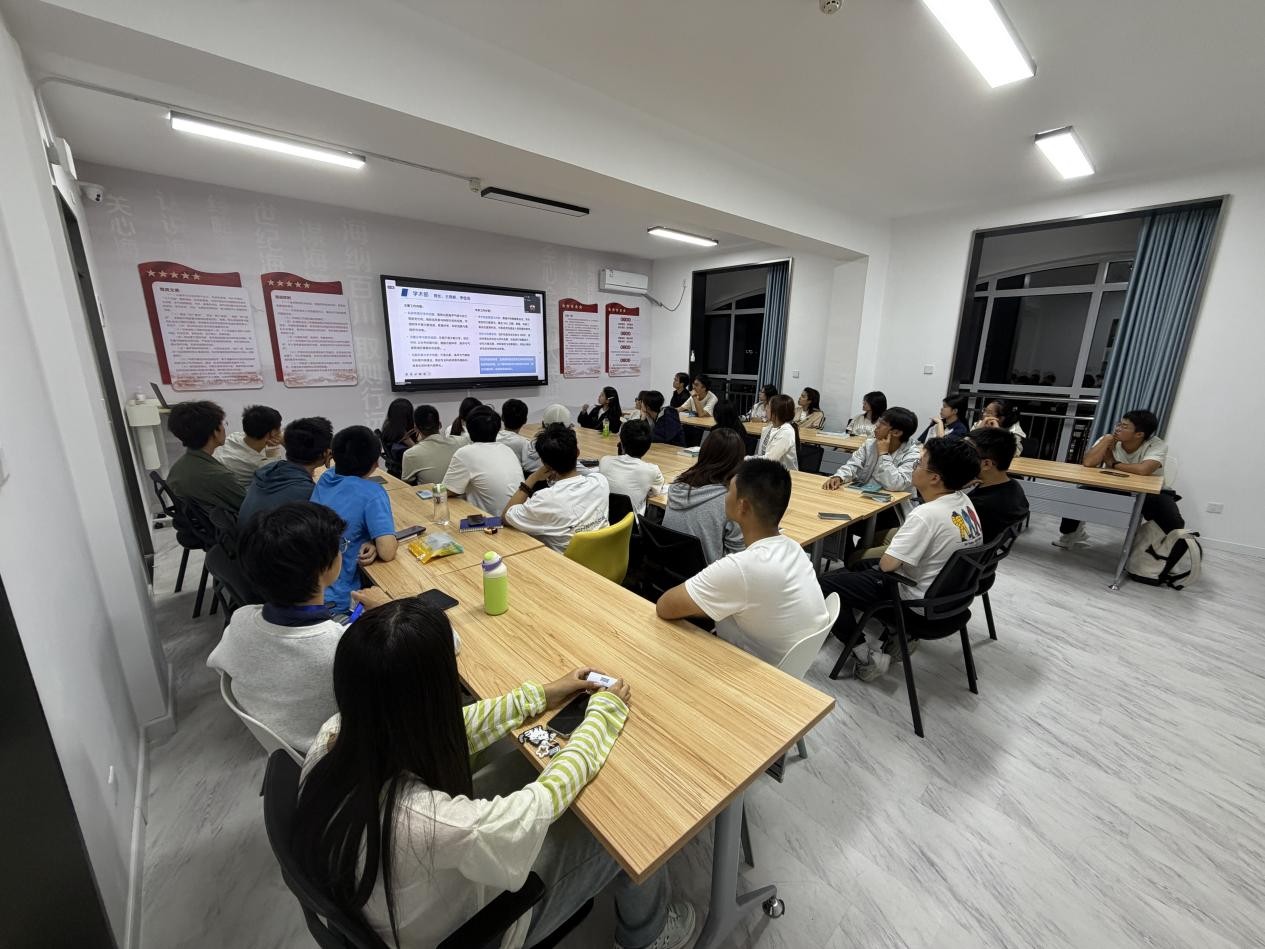
SAIL introduced its mission, three departments and plans for research training, academic exchange, science outreach and innovation projects at its September 28 recruitment event.
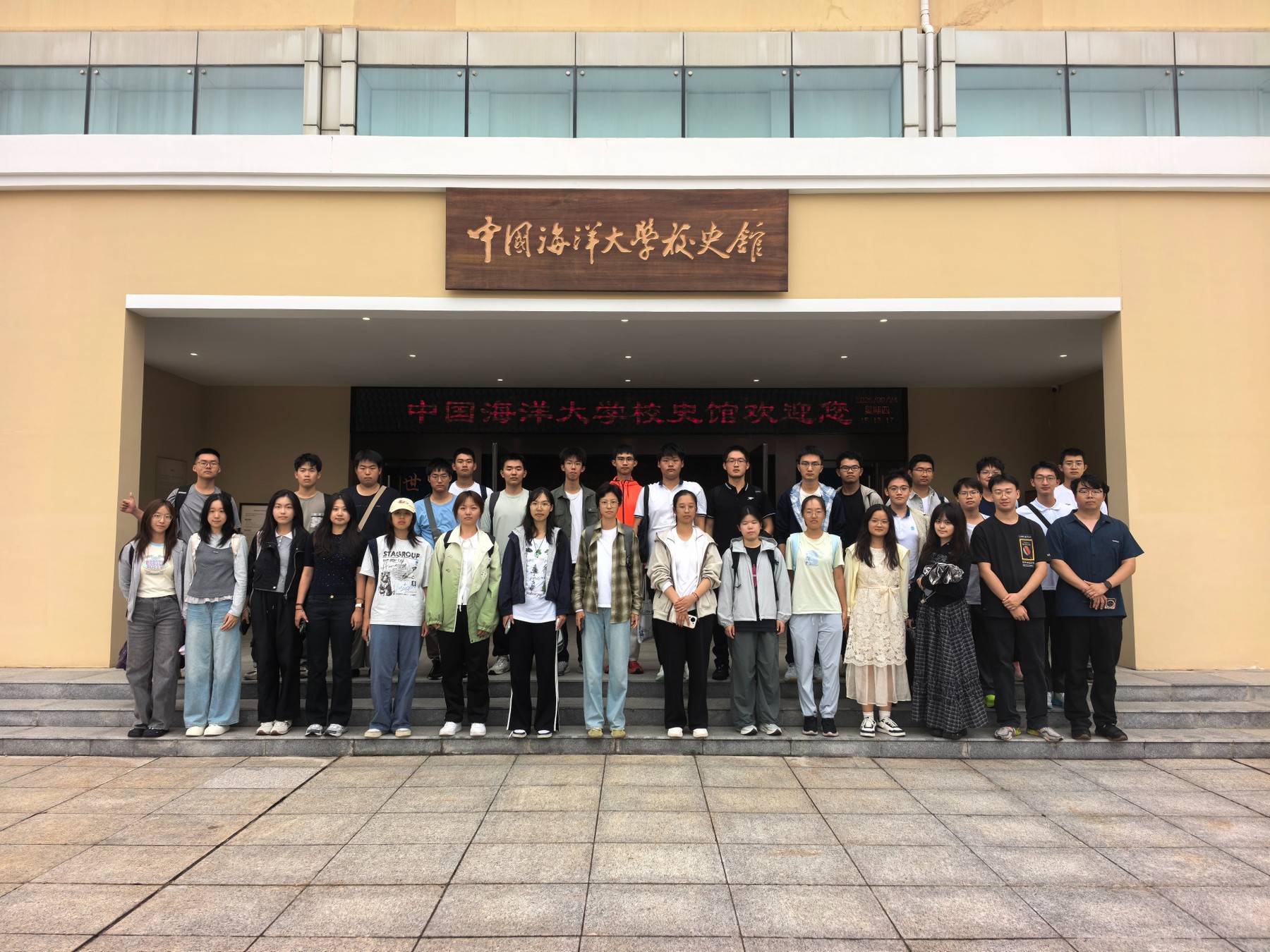
For National Science Popularization Month, SAIL hosted Geng Xin's account of the 15th Chinese National Arctic Research Expedition on September 23 and visited Ocean University of China's university history museum on September 24. The activities connected field observations of sea fog, sea-surface skin temperature and sea ice with the university's history of marine research.
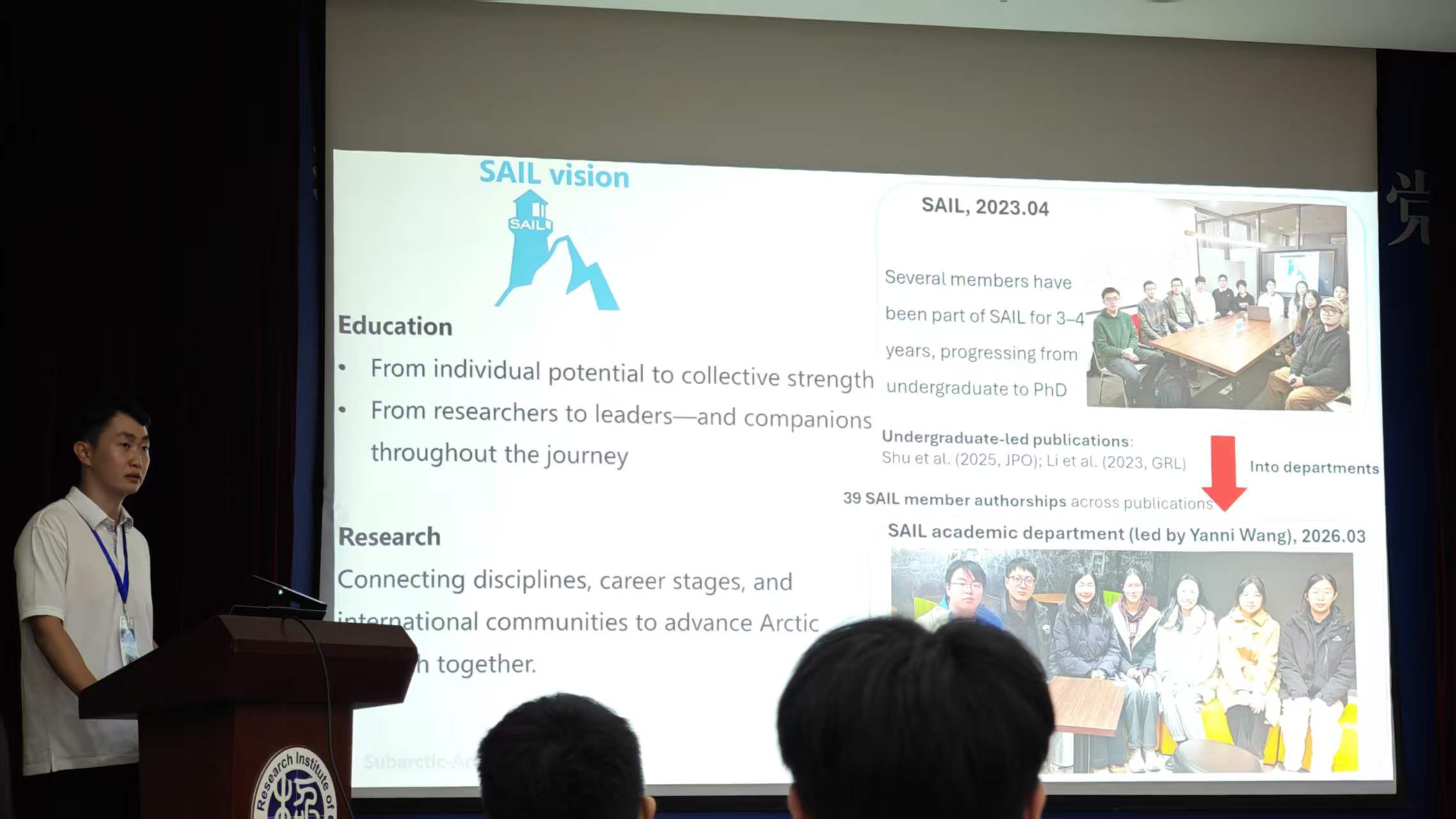
SAIL members were invited to give presentations at the 2026 Polar Science Summer School, the flagship academic exchange platform of the Key Laboratory of Polar Science under the Ministry of Natural Resources. The programme was the 18th Polar Science Summer School, jointly organized by the Polar Research Institute of China, the Key Laboratory of Polar Science, and the Institute of Polar Ice, Snow and Climate Change.
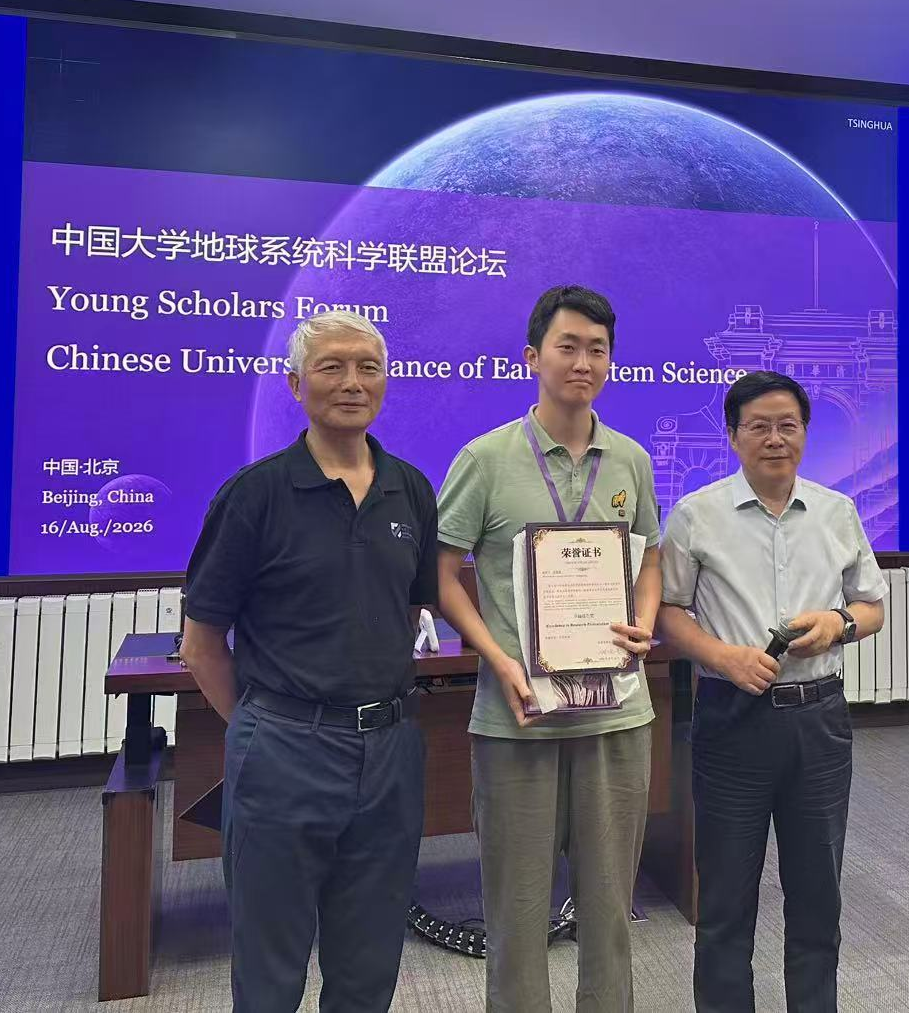
At the Chinese University Earth System Science Alliance Young Scholars Forum, SAIL founder Ruijian Gou received the highest score and the Outstanding Presentation Award for his presentation on scale-dependent surprises in ocean and climate dynamics.
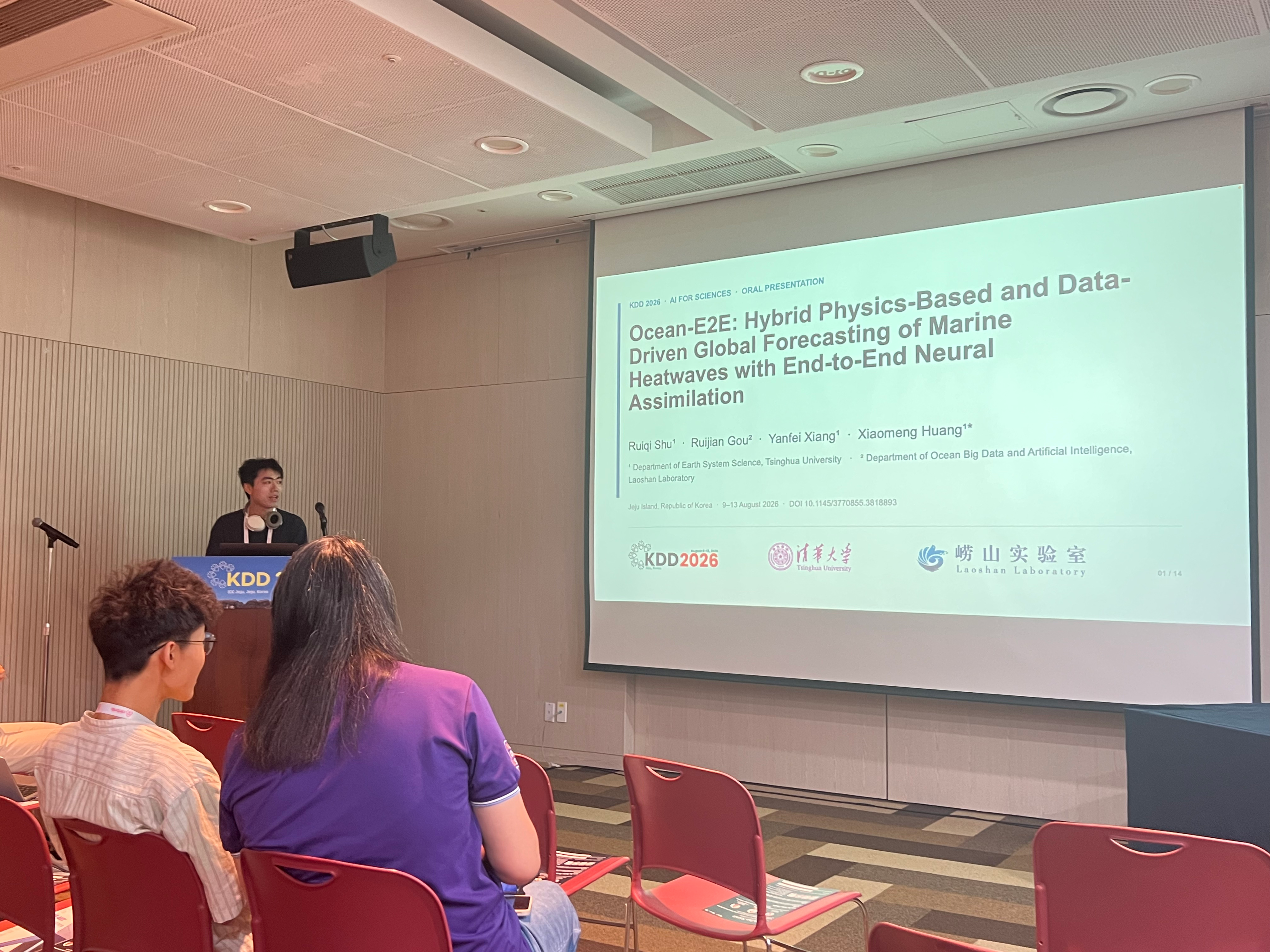
SAIL Machine Learning Working Group core member Ruiqi Shu gave a first-author oral presentation at KDD 2026. Ocean-E2E is an end-to-end framework that connects sparse ocean observations with global extreme marine heatwave forecasts through hybrid physics-based and data-driven modelling with neural assimilation.
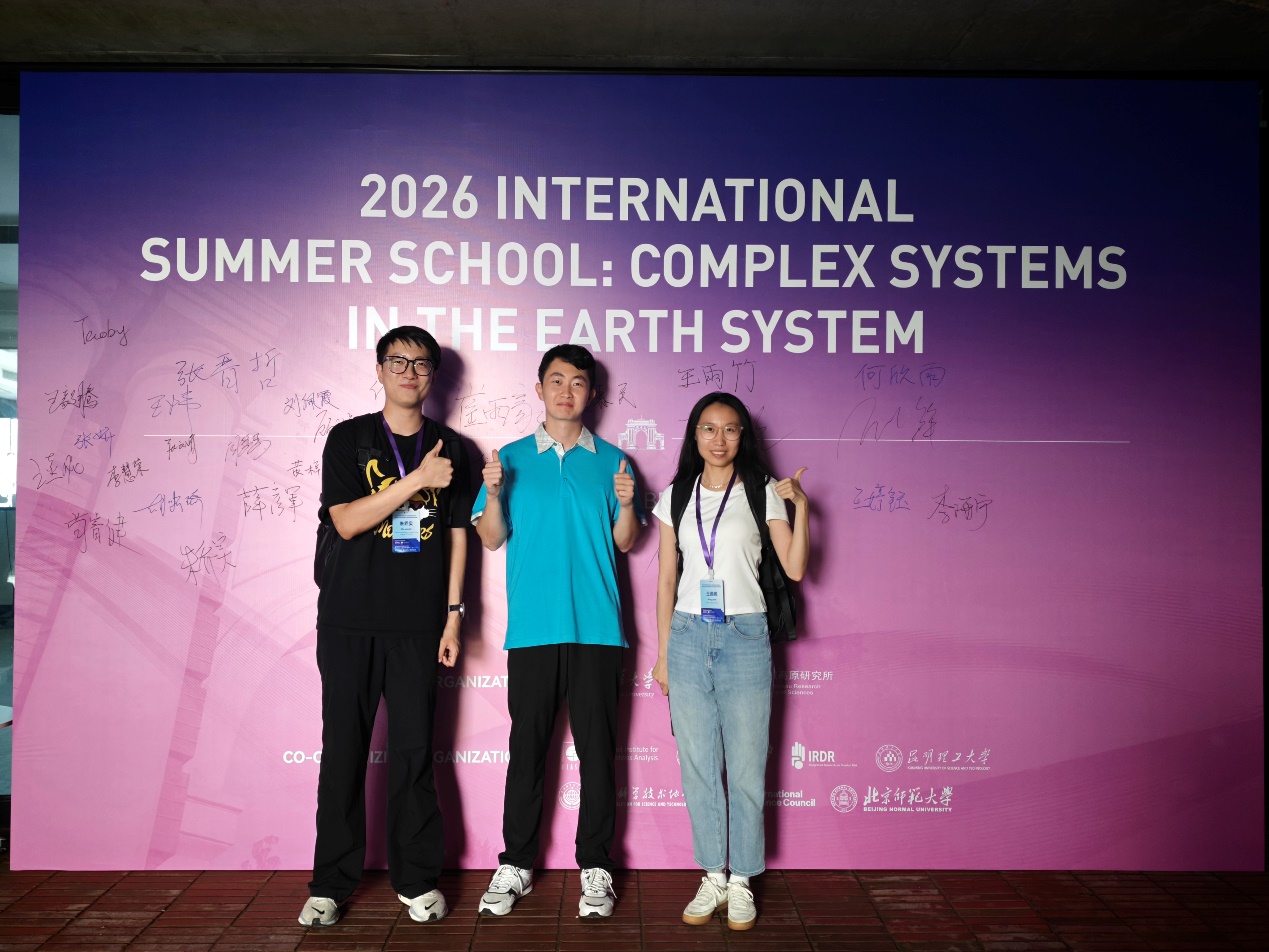
SAIL members attended the Tsinghua University Complex Systems Summer School, exchanging ideas with lecturers and researchers on complex systems, artificial intelligence, interdisciplinary science, and future collaboration.
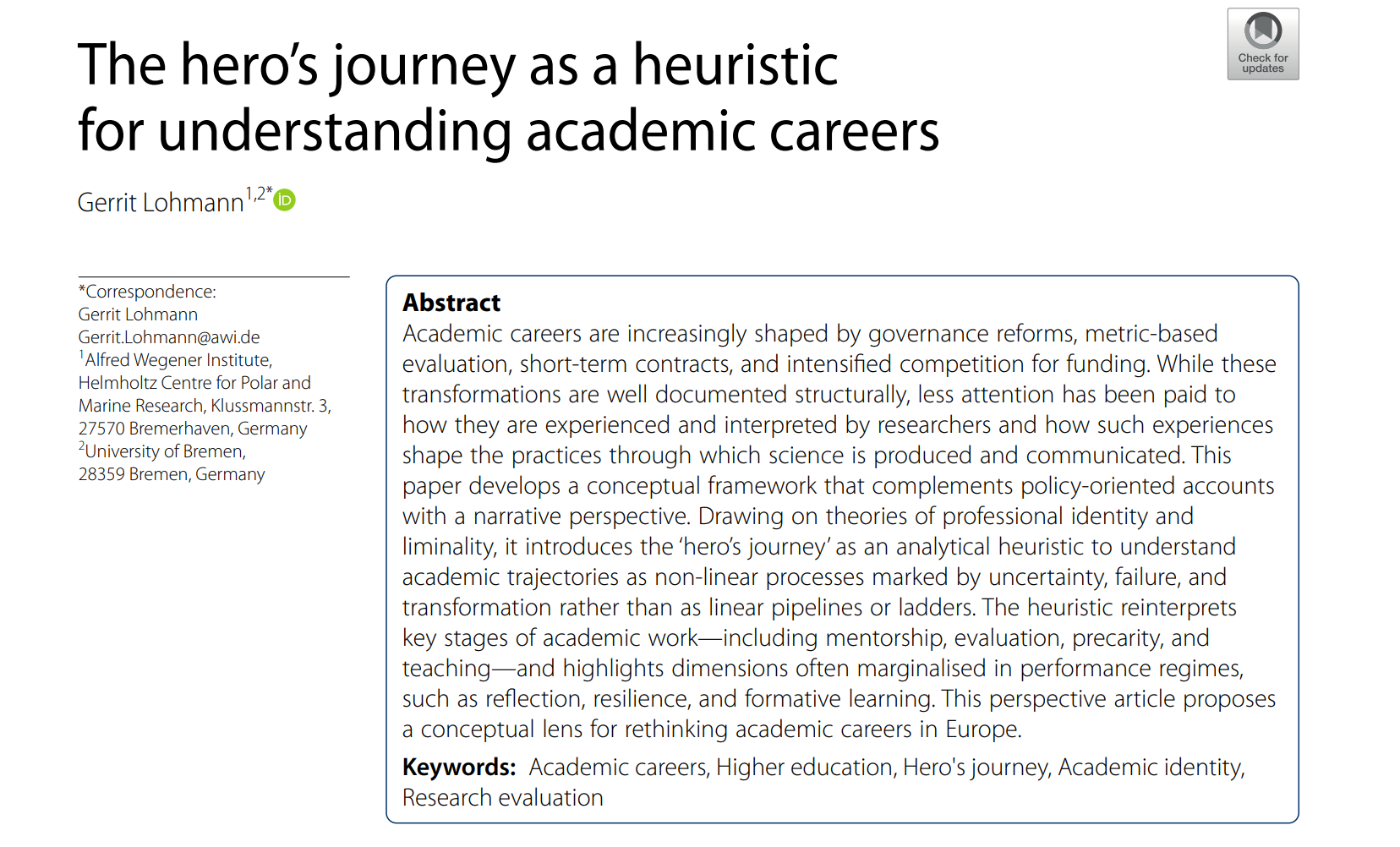
SAIL collaborator Gerrit Lohmann published a perspective article in Discover Education, proposing the Hero's Journey as a narrative framework for understanding challenges, transformation, and value in academic careers.
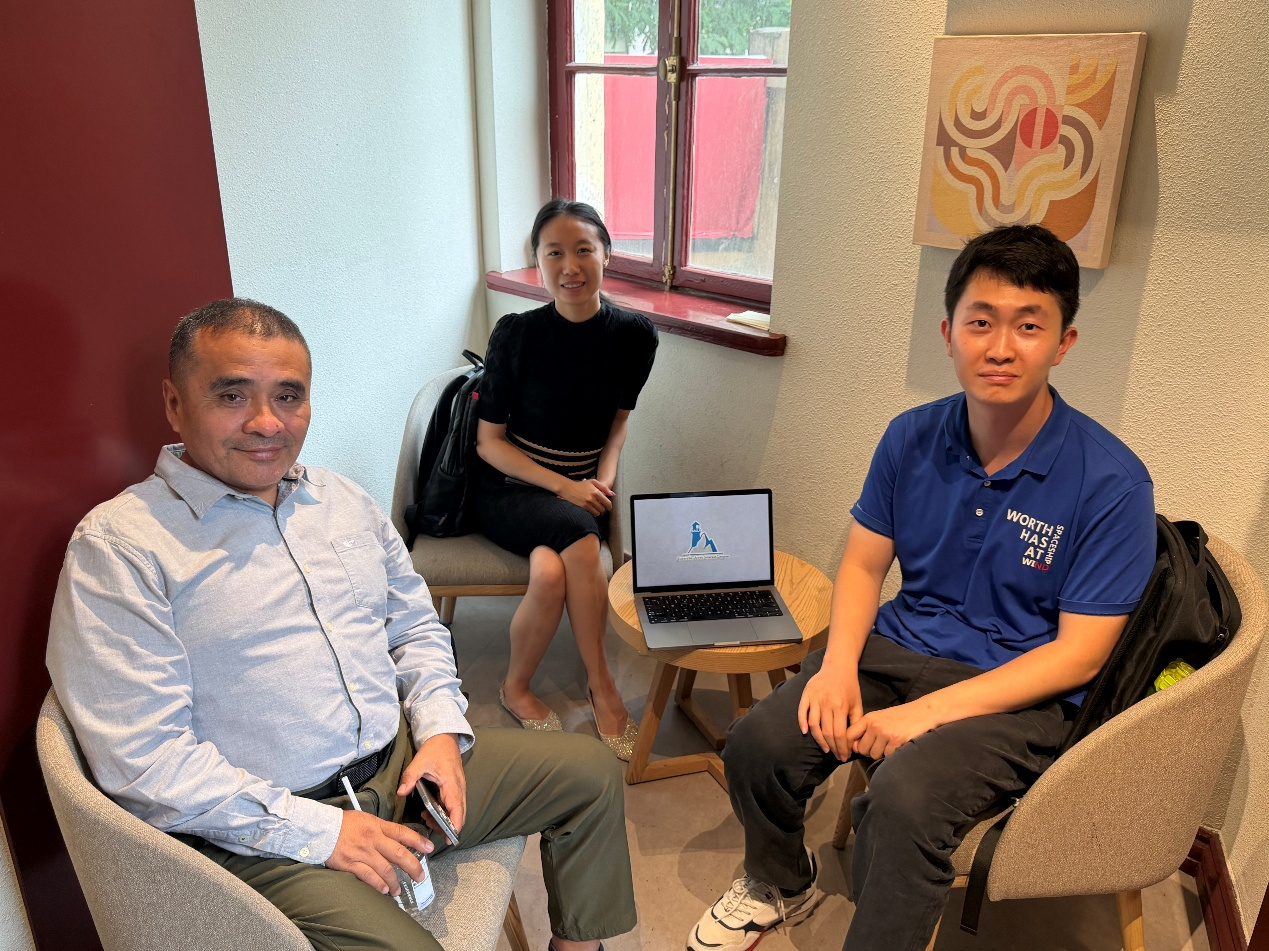
Prof. William Cabos visited Qingdao for academic exchanges with SAIL. Discussions focused on regional high-resolution climate modeling, marine extremes, and potential joint research initiatives.
As another graduation season arrived, SAIL hosted a farewell dinner for Yanni Wang, Qiaoshi Zhu and Jiayi Zhang. Members gathered around the table to look back on shared research discussions and collaborations, and agreed to keep regular communication as the graduates move on to new institutions and fields.

SAIL founder Ruijian Gou delivered an oral presentation at the 2026 European Geosciences Union General Assembly on stronger future Arctic Ocean convection associated with resolved boundary currents in high-resolution simulations. The presentation also introduced the collaboration between SAIL and the Norwegian ArMOC project.

Invited by Gerrit Lohmann, SAIL founder Ruijian Gou visited the Alfred Wegener Institute and gave a talk entitled “Variability, Tipping, Resilience in the Arctic Ocean: Small-Scale Perturbations to Large-Scale Climate Shifts.” The exchange strengthened SAIL’s collaboration with AWI on Arctic Ocean and climate-change research.

At the annual meeting of the ERC Synergy project “i2B – into the blue” in Tromsø, SAIL founder Ruijian Gou chaired a SAIL-initiated session on Arctic resilience. The discussion brought together project members from AWI, NORCE and UiT and focused on Arctic environmental change, resilience and interdisciplinary collaboration under climate warming.

SAIL founder Ruijian Gou held a collaboration meeting with Hans Joachim “John” Schellnhuber. The discussion focused on future cooperation around Arctic tipping mechanisms, international collaboration and the role of SAIL in advancing Arctic climate research.

The 3rd CAMAS Annual Meeting was held at MBARI in California. Ruijian Gou chaired a session on sea surface temperature and sea ice. Yanni Wang presented progress on Arctic sea temperature and sea-ice memory variability, while Guo Jiahao, Zhu Qiaoshi and Diao Yufei participated online in core sessions.

Ruijian Gou and Jiayi Zhang held academic exchanges with the core team of the EU “i2B – into the blue” project, including scholars from AWI, NORCE and UiT. The discussion focused on Arctic tipping points, paleoclimate reconstruction and numerical modeling applications.

Invited by researchers from the Nansen Environmental and Remote Sensing Center, Ruijian Gou gave a lecture as a Bjerknes Visiting Fellow on future Arctic marine heatwaves and their potential ecosystem impacts. The discussion covered interdisciplinary data integration, model uncertainty and Arctic climate-ecosystem adaptation.

Marianne Williams-Kerslake from the University of Bergen visited SAIL and Ocean University of China. The meeting focused on Arctic marine heatwaves, including formation mechanisms in the Barents Sea, and laid the foundation for follow-up collaboration on Arctic marine heatwave definitions and mechanisms.

Gerrit Lohmann from the Alfred Wegener Institute joined a regular guidance meeting for SAIL Arctic research. The participants discussed mathematical models, analytical tools, abrupt Arctic climate changes and their responses to climate change.

Ruijian Gou participated in a meeting hosted by the Potsdam Institute for Climate Impact Research to discuss key marine processes and their roles in the Planetary Boundaries framework. The meeting brought together leading scholars from multiple institutions and reached preliminary consensus on marine boundaries.

Ruijian Gou held cooperation discussions with Johan Rockström, Director of the Potsdam Institute for Climate Impact Research and creator of the Planetary Boundaries framework. The discussion explored links between SAIL Arctic research, planetary boundaries and climate tipping points.
